
How is a Balissandre adjustable?
When you receive your Balissandre, place it on the animal’s back as is. Then check to see what is wrong. Is it too tight? Too loose?
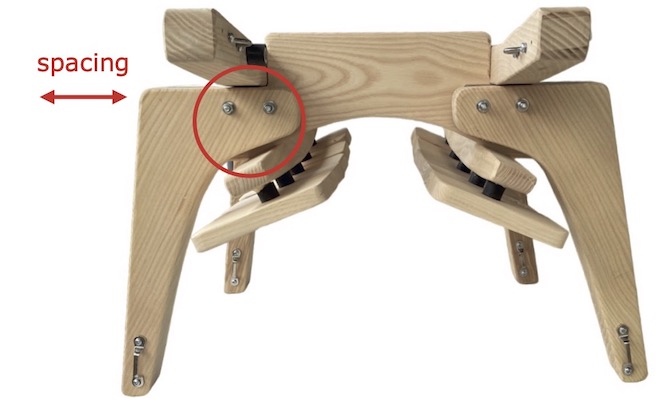
Adjust it by moving the hoops closer together or further apart. This will ensure comfort when carrying.
The packsaddle will be correctly adjusted when the four hoops are tight against the mat.
Each size of Balissandre has a minimum and maximum spacing at the front and back.
Before ordering, make sure you know the right size for your animal.
Balissandre comes in three sizes: XS, S and M.
To find the right size Balissandre for your animal, follow these steps in order:
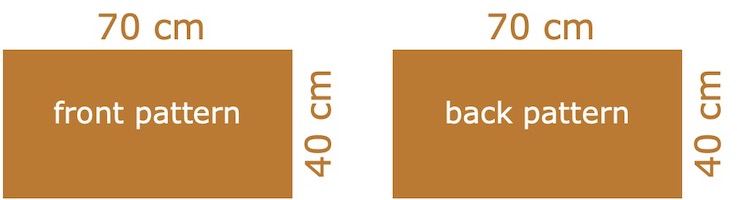
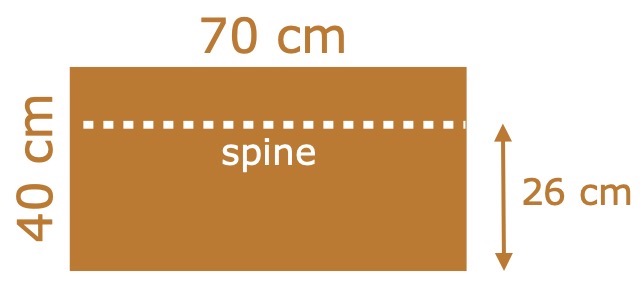
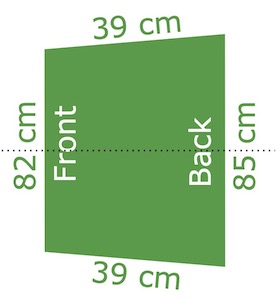
Cut out two pieces of cardboard with the following dimensions:
1 – The first piece will be called FRONT PATTERN
2 – The second piece will be called BACK PATTERN
.
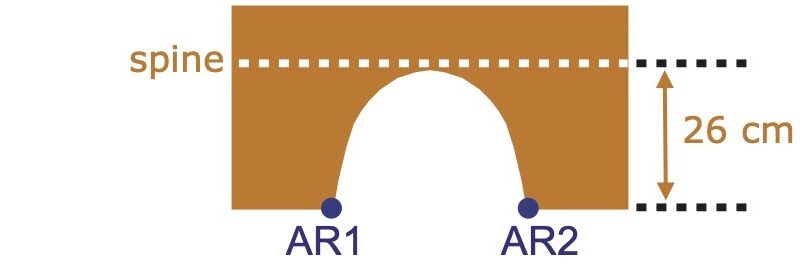
On both pieces of cardboard, draw a line 26 cm from the bottom. This line represents the level of the spine at the top of the cut-out.

.
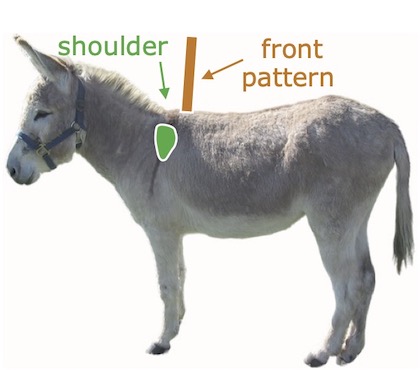
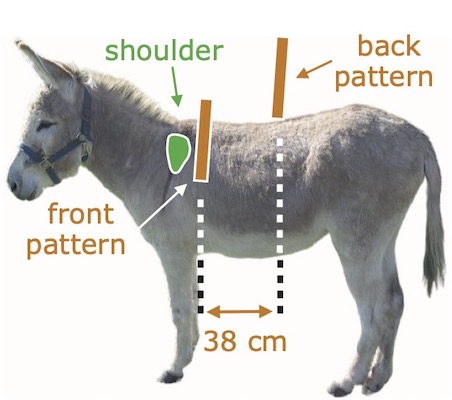
Position the FRONT PATTERN just behind the shoulder. The shoulder is the bone located under the St. Andrew’s cross, on either side of the spine.
Cut the cardboard with a pair of scissors to fit the shape of the back. After cutting, the dotted line should be level with the spine.
.
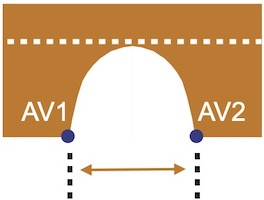
When the cutting is complete, points AV1 and AV2 (26 cm below the spine) indicate the location of the ends of the front hoops.

.
Measure this distance AV1-AV2.
.
Position the Back Pattern 38 cm behind the Front Pattern. This is where the back hoop will be located.
Cut the cardboard with a pair of scissors to match the shape of the back. The dotted line should be at the level of the spine.

.
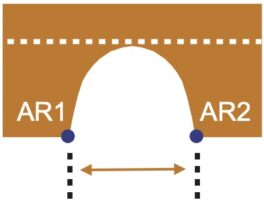
When the cutting is complete, points AR1 and AR2 (26 cm below the spine) indicate the location of the ends of the rear hoops.
.
Measure this distance AR1-AR2.
.
Check the table below to find the right Balissandrellon for you.
Or send us these two measurements, AV1-AV2 and AR1-AR2, by email. We will reply with the size of Balissandre (XS, S or M) that will fit your animal.
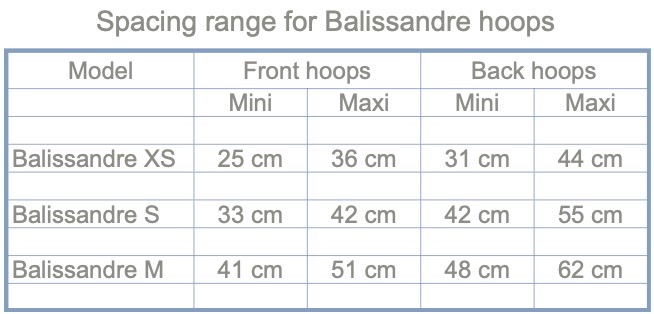
Please note: the thickness of the mat must be added to the width of the animal. A Couveton Randoline contains a 20 mm thick felt layer. Therefore, add 40 mm to your measurements before comparing them in the table.
.
Additional measurements: We also require a few measurements to determine the size of the leather belts.

.
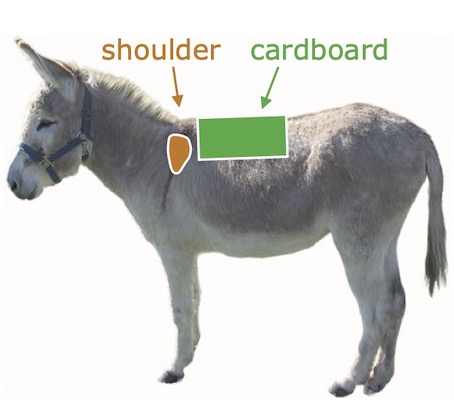
Cut a piece of cardboard into a trapezoid shape, approximately the same size as the Balissandre.

.
Fold the cardboard over the animal, as if it were a blanket. Position it just behind the shoulder. The shoulder is the bone located under the St. Andrew’s cross, on either side of the spine.


.
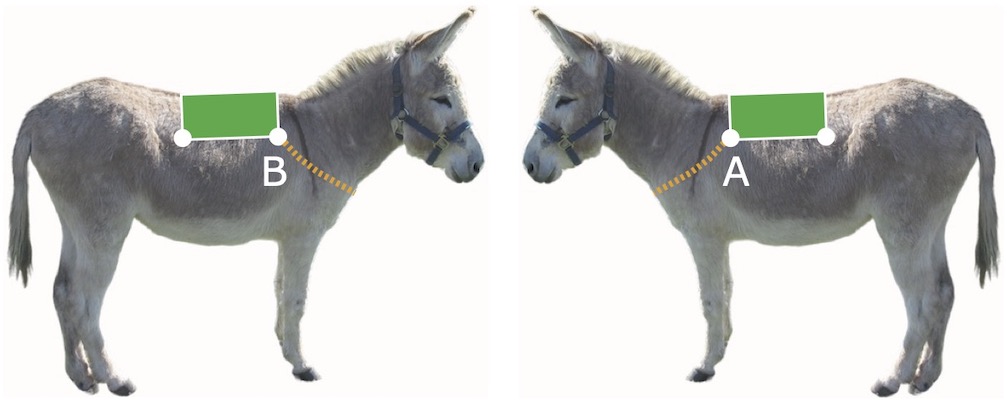
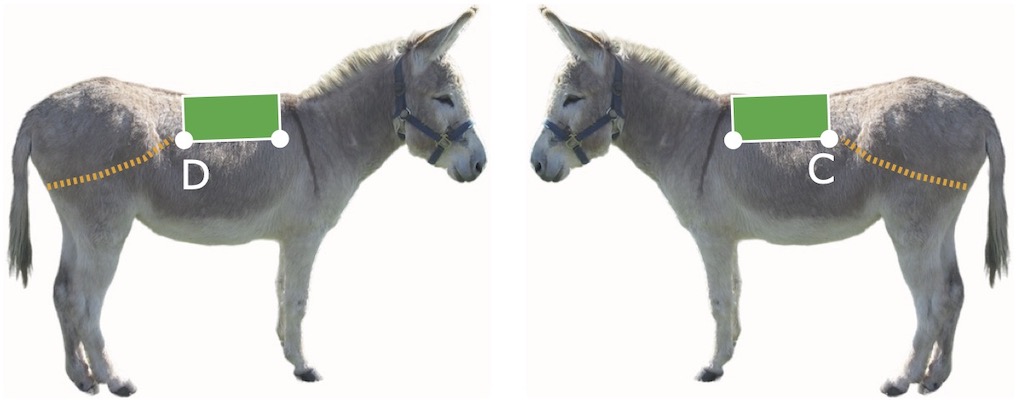
Mark the corners of the packsaddle (where the straps will be attached) with the letters A-B-C-D.

.
Using a flexible tape measure, measure the A-B dimension across the animal’s neck (for the front strap, known as the “brest collar”).

.
Using a flexible tape measure, measure the C-D dimension by passing behind the animal’s hindquarters (for the rear strap, called the “breeching”).

.
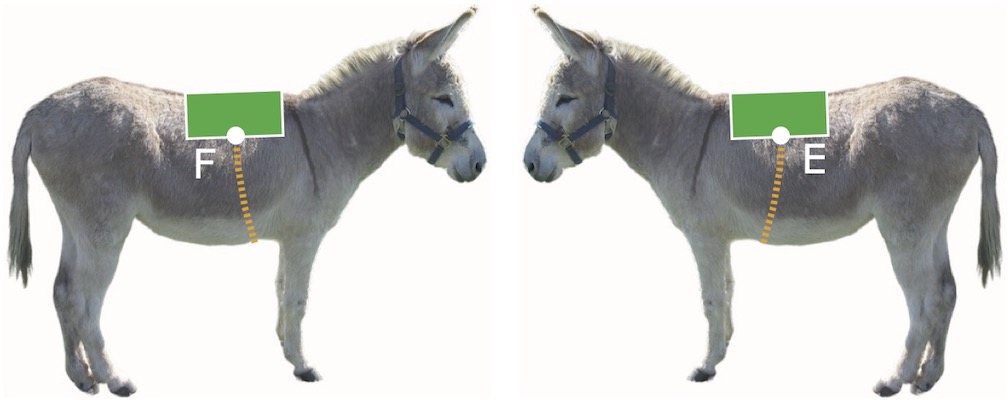
Locate the letters E-F in the centre of the pack-saddle. Using a flexible tape measure, measure the E-F dimension under the belly (for the strap under the belly, called the “belly belt”).